How to prepare your plumbing for winter in Buckeye
Buckeye nights drop below freezing from December through February. Here is how to prepare your plumbing for winter in Buckeye before the first hard freeze hits.
You prepare your plumbing for winter in Buckeye by insulating every exposed pipe, disconnecting garden hoses, dripping one or two faucets on freeze nights, and knowing where your main shut-off valve is. Buckeye sits in the lower Sonoran Desert, but overnight lows still hit 28°F to 32°F multiple times each December and January, and that is cold enough to split a copper line or crack a PVC fitting.
Most of the damage we repair each winter happens to pipes that were never insulated in the first place - the ones running through an unheated garage, across an attic joist, or out to a hose bib on the north side of the house. Here is exactly how we winterize plumbing in Buckeye, what it costs when something goes wrong, and the mistakes that turn a $40 fix into a $4,000 repair.
Do pipes actually freeze in Buckeye, Arizona?
Yes. Pipes freeze in Buckeye, Arizona every winter, usually between mid-December and early February when overnight temperatures drop into the high 20s. The National Weather Service records an average of 10 to 15 nights per season below 32°F in the West Valley, and a hard freeze - 28°F or lower for four or more hours - happens most years.
What surprises new residents is how fast it happens. Desert homes are built for heat, not cold. Water lines often run through the attic, along exterior walls, or through an uninsulated garage wall. When the temperature drops to 29°F at 3 a.m., a half-inch copper pipe in an open attic can freeze solid in under three hours.
Water expands about 9% when it turns to ice. That expansion is what splits the pipe. You usually do not see the leak until the ice melts the next morning and water starts spraying into your attic or dripping down a wall.
How do I prepare my plumbing for winter in Buckeye AZ?
You prepare plumbing for winter in Buckeye AZ by working through five steps in order: insulate exposed pipes, disconnect and drain outdoor lines, seal the crawlspace and garage vents, set up a freeze-night routine, and locate your main shut-off valve. Do this in November before the first freeze warning - not the night of.
Here is the checklist we walk through with homeowners every fall:
- Insulate every exposed pipe in the attic, garage, and along exterior walls. Foam pipe sleeves cost about $2 to $4 per six-foot section at any Buckeye hardware store.
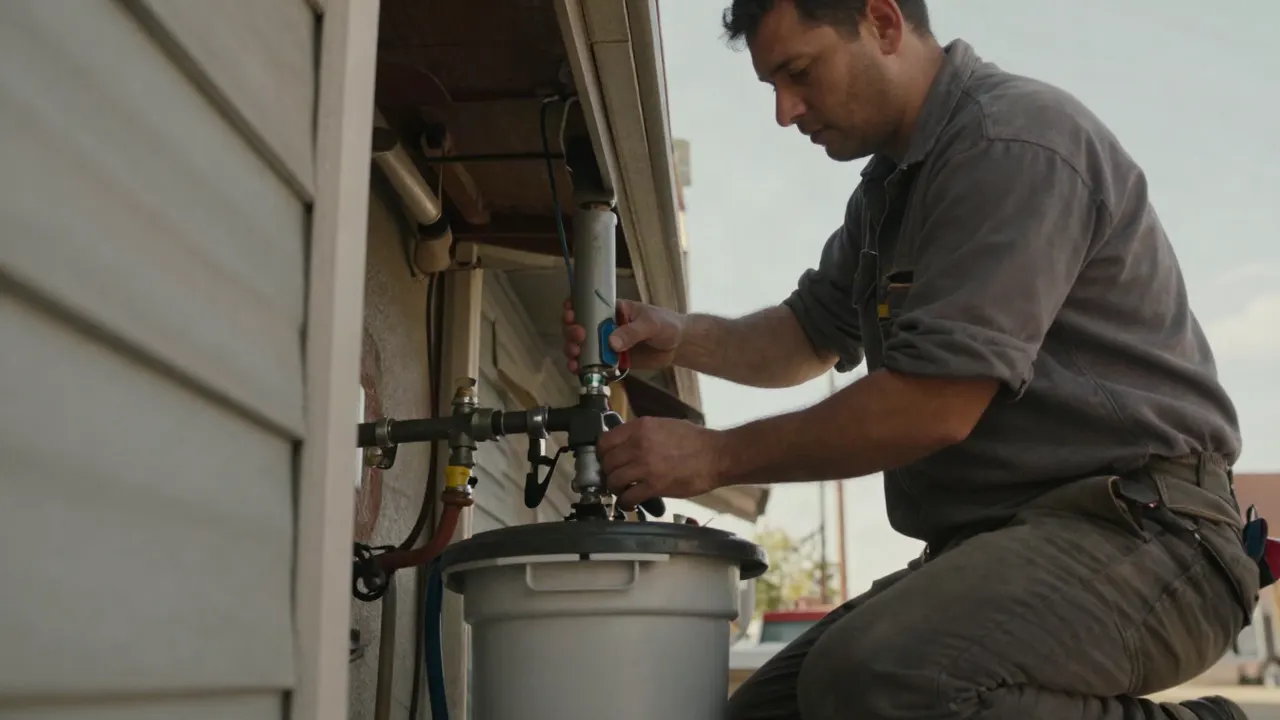
- Disconnect garden hoses and drain the hose bibs. A hose left connected traps water in the spigot and it splits the valve body.
- Seal gaps around pipes where they pass through exterior walls. Expanding foam or caulk stops cold air from pouring in.
- Insulate the water heater tank and pipes if the unit sits in the garage. An insulation blanket runs $25 to $40 and pays for itself in one winter.
- Find your main shut-off valve and tag it. If a pipe bursts at 2 a.m., you have seconds to stop the water.
If your home was built before 2000, there is a good chance some of the original lines are polybutylene or thin-wall copper that has already been stressed by 25 summers of 110°F heat. Those pipes are the first to fail in a freeze. If you are already seeing pinhole leaks or discolored water, it may be time to look at pipe replacement buckeye AZ before winter makes the decision for you.
Insulate the pipes that run through your garage and attic
Pipe insulation for winter in Buckeye AZ matters most in two places: the attic and the garage. Those are the two spots where the temperature inside your house drops closest to the outdoor temperature, and they are where we find 80% of freeze damage.
Use closed-cell foam pipe sleeves, not fiberglass wrap. Foam sleeves slide over the pipe, seal at the seams, and hold up to attic heat without degrading. For pipes in a tight corner, use foam tape. For pipes running along an exterior wall, add a layer of foil-backed insulation between the pipe and the wall.
Pay attention to elbows, tees, and shut-off valves. Those fittings have more surface area and freeze first. Cut short pieces of foam to wrap them, or use spray foam in a can for odd shapes.
If your attic has a pull-down stair or a gable vent that stays open year-round, close it before the first freeze. A 12-inch open vent can drop attic temperature 15°F below the outdoor reading.
Disconnect hoses and protect outdoor spigots
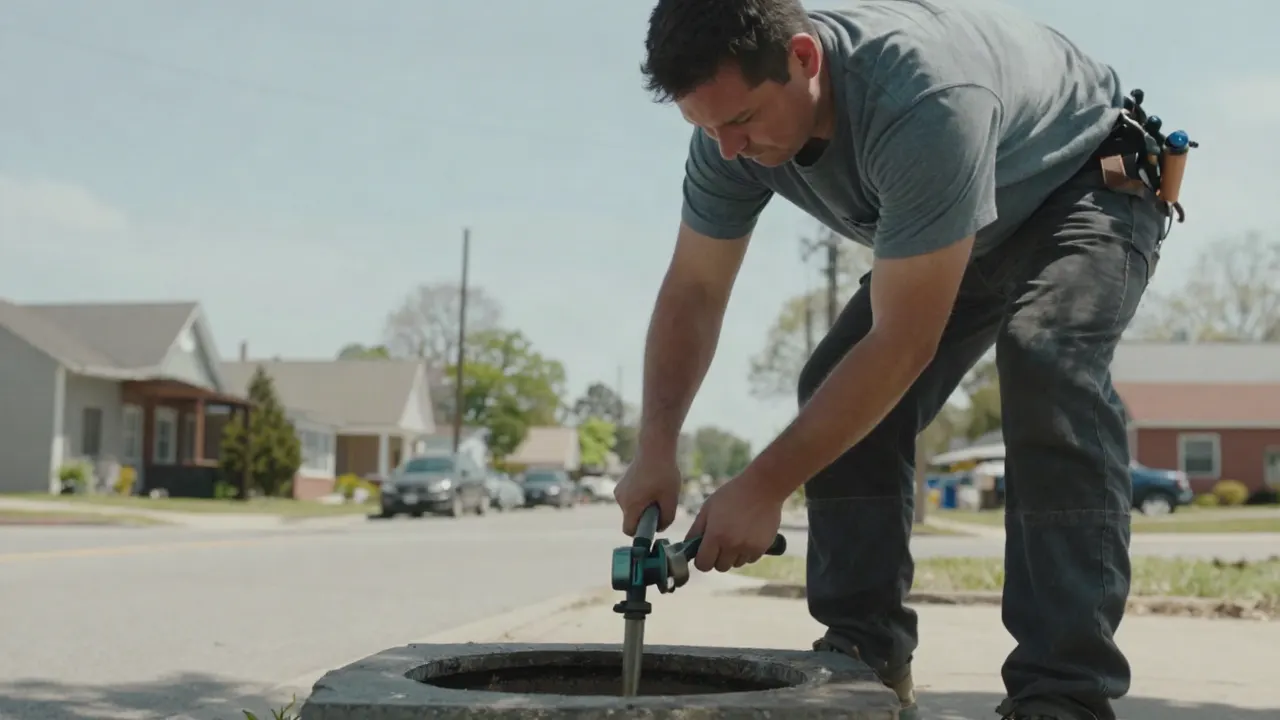
Disconnect every garden hose before the first freeze warning. A hose left attached to a spigot traps water inside the valve, and when that water freezes it cracks the brass body from the inside. You will not notice until you turn the spigot on in March and water pours out of the wall.
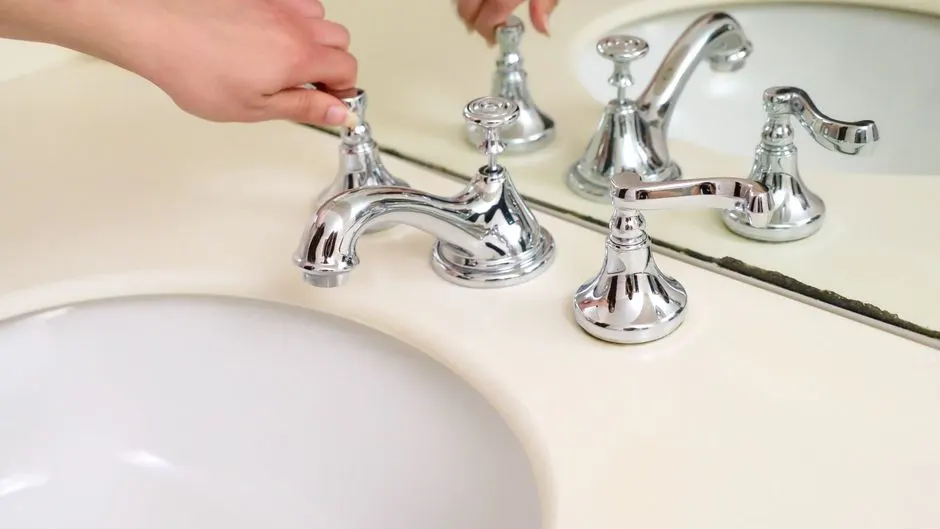
After the hose is off, install a foam faucet cover over each outdoor spigot. They cost $3 to $6 and take ten seconds to fit. For hose bibs on the north or east side of the house - the sides that stay shaded and stay colder longer - consider a hard-shell insulated cover instead.
If you have a pool, an evaporative cooler, or a drip irrigation system, those need their own winterization. Drain the cooler pan and lines. Blow out irrigation lines with compressed air or shut off the backflow preventer and drain it. Pool equipment should run on a freeze-protection schedule or be drained per the manufacturer's instructions.
We handle this as part of our residential plumbing services buckeye AZ every fall, and it is the single cheapest hour of work you can buy all year.
What to do with your water heater before winter
Your water heater works harder in winter because incoming groundwater is colder. In Buckeye, ground water sits around 68°F in summer and drops to about 55°F in January. That 13-degree drop means your heater burns more gas or pulls more amps to bring the same water up to temperature.
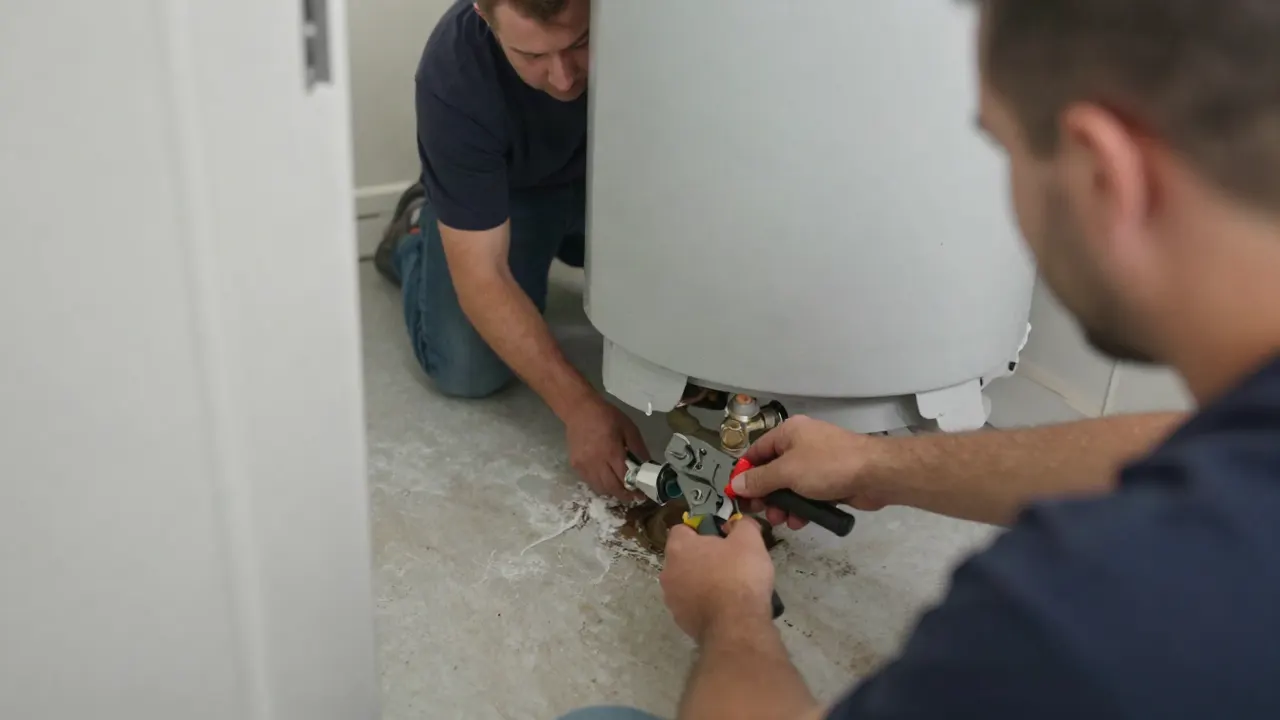
Before winter, flush the tank to remove sediment. Sediment at the bottom of the tank acts like a blanket between the burner and the water, and it forces the unit to run longer. A flush takes about 45 minutes and costs $125 to $200 if you have us do it.
If your water heater is more than 10 years old, watch for these signs: popping or rumbling sounds, rusty hot water, or moisture around the base. Any of those mean the tank is on its way out. Replacing it in October is far cheaper than replacing it during a cold snap when every plumber in the West Valley is booked solid. Our water heater installation buckeye AZ team can usually get a new unit in the same week.
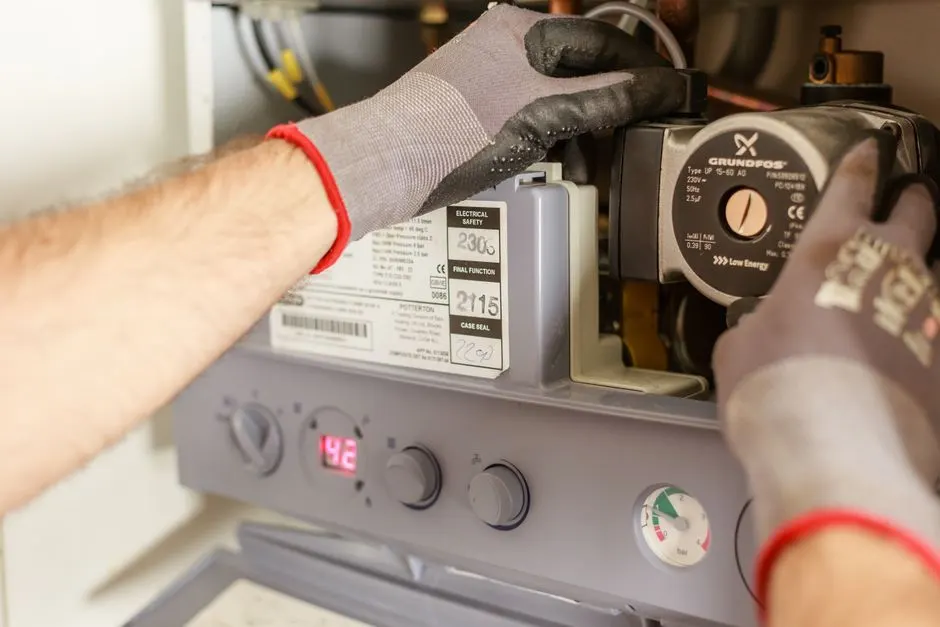
If you have a tankless unit, winter prep is different. Tankless heaters can freeze if the power goes out, because the freeze-protection cycle needs electricity. If you lose power during a freeze, open a hot-water faucet to a trickle to keep water moving through the heat exchanger.
Common mistakes we see every freeze
The same four mistakes cause most of the frozen pipe calls we run in Buckeye each winter.
- Waiting until the freeze warning to act. Insulation and hose covers sell out the day before a freeze. Buy them in November.
- Leaving the garage door open overnight. An open garage door drops the temperature around your water heater and any pipes running through the garage by 20°F or more.
- Dripping the wrong faucet. Drip the faucet farthest from where the water enters the house, and drip both hot and cold. A single drip on a bathroom sink does not protect a pipe in the attic on the other side of the house.
- Using a torch to thaw a frozen pipe. Every year someone burns down a wall trying this. Use a hair dryer, a heat lamp, or call us.
One more: do not assume a pipe is fine because it did not burst last winter. Copper and PVC fatigue. A pipe that survived three freezes can split on the fourth.
When to call a professional
Call a professional if you have no water at any fixture, if you hear water running behind a wall when nothing is on, or if you see frost on a pipe you can reach. Those are signs the line is already frozen or already cracked.
Buckeye Desert Bloom Plumbing handles winter plumbing preparation and emergency frozen pipe repair across Buckeye, Verrado, Tartesso, and the surrounding West Valley. We carry pipe insulation, thawing equipment, and replacement fittings on every truck, so we can usually fix a frozen line in one visit rather than two.
We also do full-home winterization for snowbirds who leave for the season. If you are heading out of state for January and February, we will shut off the water, drain the lines, and set the water heater to vacation mode so you do not come home to a flooded house.
Frequently Asked Questions
How do I prepare my plumbing for winter in Buckeye AZ?
Insulate all exposed pipes in the attic and garage, disconnect and drain garden hoses, cover outdoor spigots, flush your water heater, and locate your main shut-off valve. Do this in November. On freeze nights, drip the faucet farthest from your water entry point and open cabinet doors under sinks on exterior walls.
Do pipes freeze in Buckeye, Arizona?
Yes. Buckeye averages 10 to 15 nights per winter below 32°F, and hard freezes of 28°F or lower happen most years between mid-December and early February. Uninsulated pipes in attics, garages, and along exterior walls freeze in as little as three hours.
How much does frozen pipe repair cost in Buckeye AZ?
Typical 2026 pricing in Buckeye runs $250 to $600 for a single accessible frozen or split pipe, and $800 to $2,500 when the repair requires opening a wall or ceiling. Emergency after-hours calls add $150 to $300. Water damage restoration, if needed, is separate and can run into the thousands.
What should I do if my pipes freeze in Buckeye?
Shut off the main water valve first, then open the nearest faucet so melting water has somewhere to go. Apply gentle heat with a hair dryer or space heater, starting at the faucet end and working back. Never use an open flame. If you cannot find the frozen section or water starts leaking, call a plumber.
How cold does it have to get for pipes to freeze in Arizona?
Pipes begin to freeze at 32°F, but the risk climbs sharply below 28°F, especially when the temperature stays there for four hours or more. Wind makes it worse. A 20°F night with 15 mph wind can freeze an exposed pipe faster than a still 25°F night.
Get help with plumbing in buckeye
If you want your winter plumbing prep done right the first time - or you already have a frozen or split pipe - call Buckeye Desert Bloom Plumbing at (928) 495-5111. We serve all of Buckeye and the West Valley, and we answer the phone 24/7 during freeze events.